96 hr
East Java Multi-Day Volcano & Waterfall Expedition
Explore Tumpak Sewu Waterfall, Mount Bromo, and Mount Ijen on a multi-day journey ending with a drop-off in Bali.
Reserve
Hand-picked by our editors — only the best 5 experiences from 40 reviewed.
Verified partners for every tour, free cancellation where available, and instant confirmation on every booking.
96 hr
Explore Tumpak Sewu Waterfall, Mount Bromo, and Mount Ijen on a multi-day journey ending with a drop-off in Bali.
Reserve
72 hr
Explore East Java's most iconic active volcanoes with flexible transfers between Yogyakarta and Bali.
Reserve
72 hr
Journey through East Java's volcanic wonders with a seamless multi-day train and overland tour ending in Bali or Yogyakarta.
ReservePrices from verified partners. Availability updates in real time at checkout. Free cancellation policies apply where shown.
The landmarks, rooms, and views travelers on this tour remember — all visible on a single visit.
The upper viewpoint shows the waterfall’s semicircular curtain and is the easiest place to understand why the site is nicknamed for “a thousand waterfalls.” The drop is about 120 meters, and the mist can fill the whole gorge on a clear morning.
This cave-and-waterfall area sits in the same corridor as Tumpak Sewu and is commonly paired with it in the one-gate ticket system. It adds a more enclosed limestone setting and a different kind of texture to the day, with dripping rock, narrow passages, and wet walking surfaces.
Grojogan Sewu is part of the same official ticket corridor around Sidomulyo. The name appears in Lumajang government notices as one of the three linked attractions, so it is useful to understand the area as a small waterfall cluster rather than a single viewpoint.
The broad volcanic plain around Mount Bromo is one of the most recognizable textures in East Java. The park sits inside Bromo Tengger Semeru National Park, a protected landscape in East Java that also frames sunrise travel and jeep access.
Bromo’s active crater is the core geological draw of the route and contrasts sharply with Tumpak Sewu’s waterfall terrain. The park is also tied to Tenggerese culture, and seasonal ceremonies such as Yadnya Kasada add context beyond the landscape.
Ijen is known for its turquoise crater lake and the pre-dawn blue-fire phenomenon that draws early hikers. The climb is physically demanding, but it rewards visitors with a crater-rim sunrise and a very different volcanic setting from Bromo.
They complement each other, but most visitors who combine both say Madakaripura is the quicker add-on while bromo ijen tumpak sewu tour from yogyakarta gives the more varied waterfall stop. If your loop already centers on the Bromo side of East Java, choose Madakaripura; if you want a bigger standalone waterfall visit, choose Tumpak Sewu.
| Feature | Top pick Tumpak Sewu | Madakaripura Waterfall |
|---|---|---|
Route fit |
East Java loop, longer stop | Bromo-side add-on, shorter stop |
Detour from Bromo/Yogyakarta loop |
Farther south from Bromo | Near Probolinggo-Bromo corridor |
Waterfall character |
Wide curtain, amphitheater view | Tall canyon fall, narrow slot |
Time on foot |
Longer descent and return | Shorter approach hike |
Crowds |
Busier at main viewpoint | Often lighter midweek |
Best for |
Big waterfall day trip | Quick Bromo detour |
| See tickets → |
Verdict: Choose Tumpak Sewu if you want the stronger standalone waterfall experience; choose Madakaripura if you need a tighter detour that fits neatly around a Bromo-based route.
Choose your ticket, select your date, and reserve in under two minutes. Secure checkout handled by our verified partner.
Instant confirmation by email, with a mobile voucher you can save offline. No printing, no queuing at a collection desk.
Arrive at the entrance, show your voucher on your phone, and walk in. Most tickets include priority or skip-the-line access.
Practical details for your visit straight from our verified partners — hours, access, rules, and how to get there.
Wear quick-dry clothing, a rain shell, and closed-toe shoes with grip. Tumpak Sewu’s approach is wet and steep, while Bromo and Ijen can be cold before sunrise, so layering works better than single heavy clothing. The Tumpak Sewu route also involves mist and splash, so sandals are a poor choice.
Use a small backpack that can be carried hands-free on stairs and slippery paths. Keep passport, phone, and cash in a zip pocket or dry bag because waterfall spray and volcanic dust are both common on this route. On a bromo ijen tumpak sewu tour from yogyakarta, operators usually expect guests to keep bags compact for vehicle transfers and trekking.
Photography is straightforward at the main viewpoints, but drones may be restricted by park or operator rules on the Bromo-Tengger-Semeru side. For Tumpak Sewu, the best shots usually come from the upper panorama point before descending; for Ijen, dawn and first light matter most. Avoid blocking narrow trails while setting up tripods.
This route is not wheelchair-friendly. Tumpak Sewu requires descending and reascending steep, wet steps, and both Bromo and Ijen involve uneven terrain or vehicle transfers. If mobility is limited, a bromo ijen tumpak sewu tour from yogyakarta should be treated as a high-exertion itinerary rather than a sightseeing-only trip.
Mobile reception can vary on mountain and canyon sections. Download maps, tickets, and driver contacts before leaving Yogyakarta, since route changes or weather delays are easier to manage offline. Keep your phone in a waterproof case near the waterfall.
Families with older children usually do better than families with toddlers because of the stairs, long transfers, and early departures. The waterfall area has mist, mud, and some exposed edges, so children need close supervision. A bromo ijen tumpak sewu tour from yogyakarta is best for active families who are comfortable with full-day logistics.
Bring your own water and light snacks, especially for the long transfers between East Java stops. There are food options in the wider Sidomulyo and Bromo access areas, but the trail itself is not set up like a picnic park. Avoid eating on the wet descent path at Tumpak Sewu because you need both hands free.
Pets are not a good fit for this itinerary because of steep trekking, crowded access roads, and volcanic terrain. Even small animals would struggle with the stairs at Tumpak Sewu and the cold, dusty conditions around Bromo and Ijen.
Tumpak Sewu is managed through Sidomulyo Village in Pronojiwo, Lumajang, and the official village site lists daily operations from 08:00 to 16:00. The destination name is often used together with nearby Goa Tetes and Grojogan Sewu in the same corridor, so a bromo ijen tumpak sewu tour from yogyakarta may combine more than one stop in the same day. Expect a physically demanding schedule rather than a relaxed sightseeing loop.
Best time to go, insider tips, nearby landmarks, and the cancellation fine print — flip through to skim what matters to you.
Flexible, no hidden fees.
If a booking is cancelled within the operator’s stated free-cancellation window, the refund follows the tour product terms shown on the live grid. Any entrance fee used for Tumpak Sewu is 100,000 IDR for foreign visitors per person and is only refundable if the operator’s policy explicitly says so.
Tumpak Sewu means "a thousand waterfalls," and the name is close to literal: the Glidik River fans across a horseshoe cliff roughly 120 metres high, splitting into dozens of separate curtains before regrouping in the gorge below. Few Javanese landscapes compress so much geology into a single frame. The wall itself is volcanic rock, laid down by Semeru, the 3,676-metre peak that still smokes on the northern horizon. That geological logic is what binds the three sites of any bromo ijen tumpak sewu tour from yogyakarta into one coherent route. The Tengger caldera holds Mount Bromo, a 2,329-metre cone inside a sand sea called the Segara Wedi — a plain of grey ash some ten kilometres wide, formed when an older volcano collapsed. The Tenggerese, a Hindu community descended from Majapahit-era settlers, still throw offerings of livestock and produce into Bromo's crater each year during Yadnya Kasada. Their temple, Pura Luhur Poten, stands alone on the ash. Kawah Ijen closes the arc at Java's eastern edge. Its crater lake is roughly a kilometre across and among the most acidic bodies of water on earth, a turquoise pool held at a pH near zero by dissolved sulphuric and hydrochloric acid. Sulphur miners have worked the crater's fumaroles since 1968, carrying baskets of yellow rock weighing 70 to 90 kilograms up the crater wall and down the mountain. The blue flame that draws visitors is combusting sulphuric gas, visible only in darkness. These are not curiosities of the past. Semeru remains among Indonesia's most active volcanoes; Bromo's status is monitored continuously; Ijen's mine still operates. A wisata bromo ijen tumpak sewu dari jogja is therefore a working landscape, not a museum. Tumpak Sewu itself sits within Lumajang Regency, and site information is published by the Sidomulyo village administration rather than a national park office — a reminder of how recently it entered the visitor map. General admission is 100,000 IDR for foreign visitors, and the falls receive visitors daily from 08:00–16:00. The distance from Yogyakarta is the reason these journeys run long. Roughly 550 kilometres of Javanese road separate the sultanate city from Lumajang's waterfall country, which is why bromo ijen tumpak sewu tour from yogyakarta tours are structured across three and four days, and why several finish in Bali rather than doubling back. Java's spine of volcanoes runs east; the itinerary simply follows it. Bromo ijen tumpak sewu tour from yogyakarta tickets consequently cover overland transit, not a single gate.
"Tumpak Sewu means a thousand waterfalls, and the name is close to literal."
A step-by-step walkthrough of the visit — what you'll see, how long each stage takes, and the details that matter.
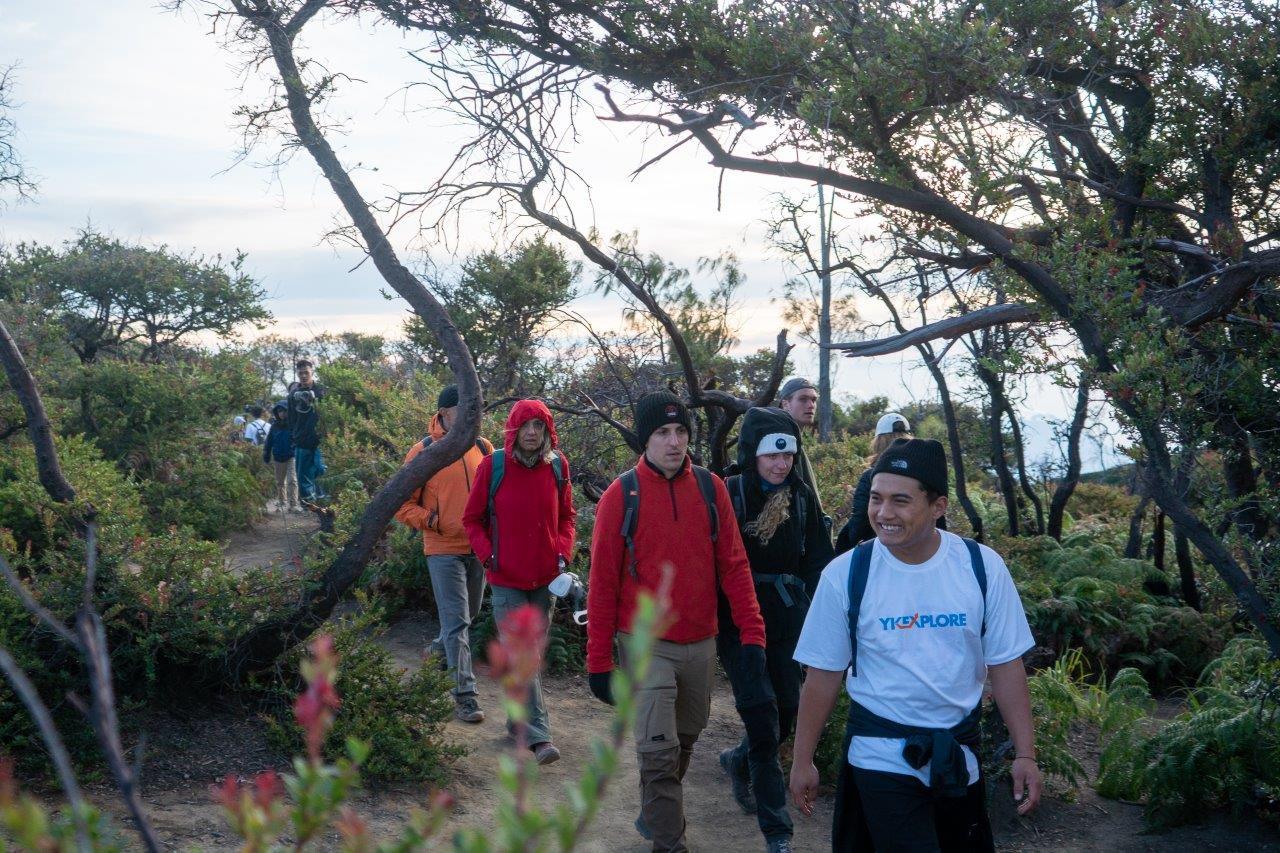
You leave Yogyakarta in the evening or early morning, depending on which of the multi-day departures you choose, and the first long stretch is road — Java's east-west artery, past rice terraces and roadside warungs. Most bromo ijen tumpak sewu tour from yogyakarta itineraries put Tumpak Sewu on the second day, and you reach it while the light is still low. At the falls you start above. The upper viewpoint gives you the full horseshoe in one look. Then you descend — bamboo ladders lashed to rock, a rope handline, mud that holds water long after rain. Twenty to thirty minutes down and you are standing in the amphitheatre with spray soaking everything you carry. Your camera will fog. Bring a dry bag. Bromo comes next, and it comes early. You wake near midnight or 03:00, ride a jeep across the ash sea, and climb 250 concrete steps to the crater rim while the sky turns from black to grey to orange behind Semeru's smoke plume. Later, on the Ijen leg, you hike roughly three kilometres uphill in darkness wearing a gas mask, watching miners pass with loaded baskets. The blue flame burns at the crater floor. By the time you turn back, the acid lake below has gone turquoise in the daylight, and the trip ends in Banyuwangi or on a ferry to Bali.
Tumpak Sewu operates daily from 08:00 to 16:00, and the best arrival window is 08:00–10:00. That timing gives softer light and fewer crowds at the waterfall entrance.
The verified foreign-visitor entrance fee is 100,000 IDR per person. The official village source and Lumajang government notices both support the one-ticket system for the Tumpak Sewu area.
It can work for families with older children, but it is not ideal for toddlers or strollers. The waterfall descent is steep and wet, and the full bromo ijen tumpak sewu tour from yogyakarta includes long transfers and early starts.
Wear closed-toe shoes, quick-dry layers, and a light rain jacket. Tumpak Sewu is misty and slippery, while Bromo and Ijen can be cold before sunrise, so the same outfit needs to handle several climates.
Pack light and keep valuables in a secure day bag. Large luggage is awkward on the waterfall stairs, and drones or tripods may be restricted by site or operator rules, especially on the volcanic side of the route.
Plan to arrive between 08:00 and 10:00. That stays within opening hours and usually gives better visibility at the viewpoint before the midday rush builds.
Yes, photography is allowed at the main viewpoints, but you should not block narrow paths or ignore local safety instructions. The Tumpak Sewu panorama point is usually better for wide shots than the lower river trail.
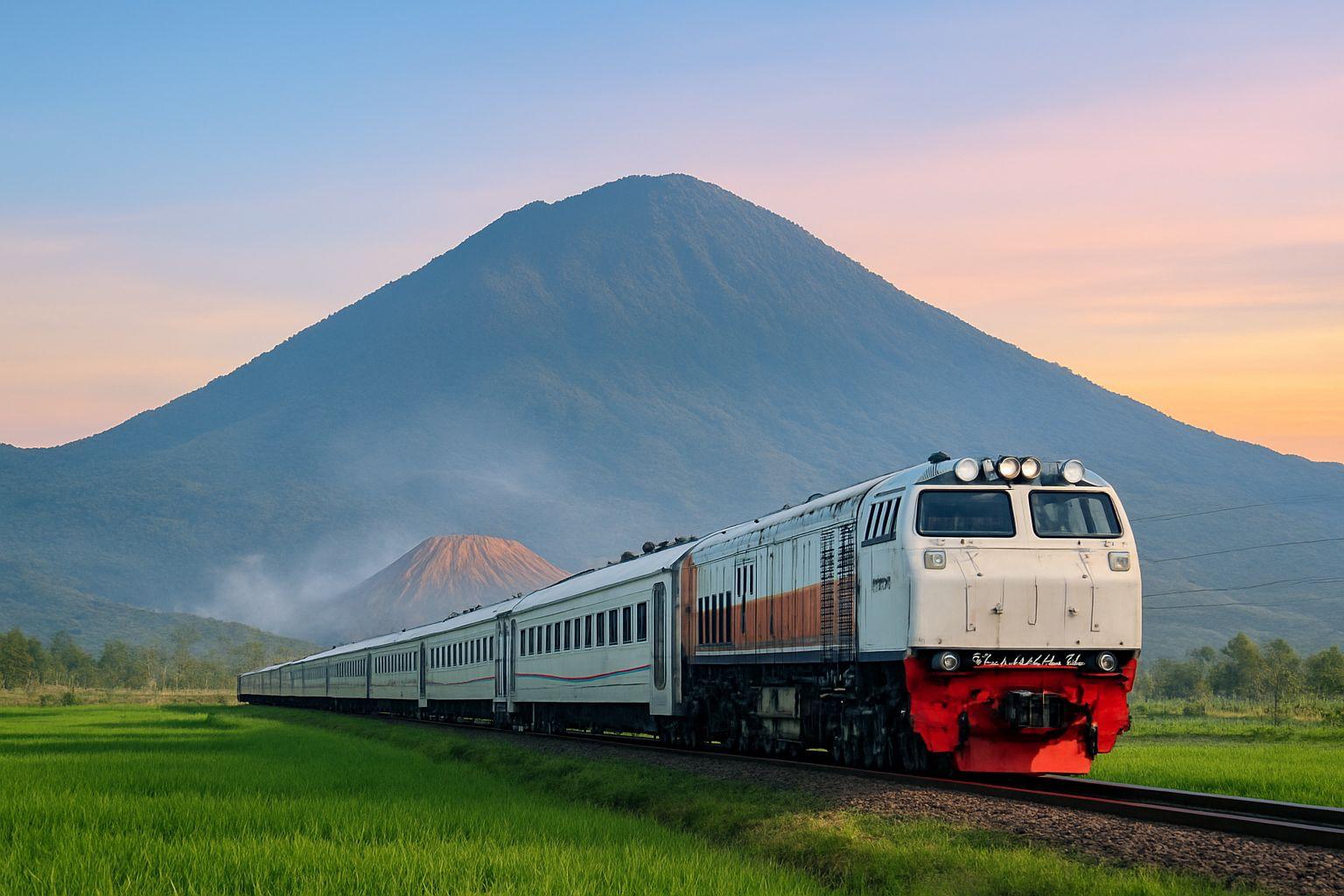
Yogyakarta travelers typically reach East Java by train, then continue by road to Lumajang, Malang, Probolinggo, or Banyuwangi depending on the route. A bromo ijen tumpak sewu tour from yogyakarta usually uses a private transfer or coordinated pickup rather than public transport for the full loop.
Bring your own water and snacks because the trek and inter-city transfers are long. Food is easier to find in town stops than on the wet descent at Tumpak Sewu, so it is better not to rely on trail-side options.
If your booking follows a standard operator policy, cancellation refunds depend on the stated time window on the live product grid. The attraction fee itself is 100,000 IDR for foreign visitors, so any refund treatment for that fee must follow the product terms, not a guess.
Goa Tetes and Grojogan Sewu are the most direct nearby additions in the same Lumajang waterfall corridor. On the broader East Java loop, Bromo and Ijen are the other two headline stops already built into the route.